

The attestation process in the UAE is a vital step for work or study, but some may encounter Certificate attestation rejected UAE due to technical or legal reasons. Therefore, in the following lines, the POA&More team provides key information about the reasons for rejection and how to address them.
What Certificate Attestation Rejected Means in UAE?
A rejected certificate attestation in the UAE means that the Ministry of Foreign Affairs or relevant authorities (such as the Ministry of Education or the Ministry of Health) have found a legal or procedural impediment preventing them from affixing the official seal that verifies the document’s authenticity. Here are the common reasons for this rejection and how to deal with them:
1. Common Reasons for Certificate attestation rejected UAE
- Missing Essential Seals: The certificate must first be attested by the Ministry of Foreign Affairs in the issuing country, and then by the UAE Embassy in that country. If one of these seals is missing, it will be rejected in the UAE.
- Non-Recognition of the Educational Institution: The university or school may not be accredited by the UAE Ministry of Education.
- Damaged Document: A tear, blurred data, or informal handwriting over the original seal.
- Unaccredited “Distance Learning” Certificates: Some online education certificates still face attestation restrictions if they are not from universities recognized for their hybrid or approved virtual education system.
- Data Discrepancies: A discrepancy between the name on the certificate and the passport, or the absence of a “reference number” for digitally verifying the certificate’s authenticity.
2. What are the consequences of a Certificate attestation rejected UAE?
If your certificate attestation is rejected, the following procedures will be affected:
- Work visa: You will not be able to complete residency procedures for professions such as engineer, doctor, teacher, manager, etc., as these professions require an attested certificate.
- Employment status change: Your employer (especially government entities) will not recognize your new degree for promotion or salary increase purposes.
- Study: Universities within the UAE will not accept your application for postgraduate programs.
How Format and Notarization Mistakes Lead to Rejection?

The attestation process in the UAE is a vital step to ensure the legality of documents, whether for work or study. Because government entities (such as the Ministry of Foreign Affairs and the Ministry of Education) adhere to strict standards, even a minor error can lead to a Certificate attestation rejected UAE. Here’s a breakdown of how formatting and attestation errors can hinder this process:
1. Formatting Errors
These errors relate to the document’s appearance and how the data is presented:
- Imperfect Data: Using faded fonts or pixelation in scanned copies makes it difficult to verify names or dates.
- Name Discrepancies: If the name on the certificate doesn’t match the name on the passport (even if it’s just one letter or a different order of names), the application will be rejected.
- Manual Alterations: Any scraping, erasing, or handwriting over printed text invalidates the certificate and is considered tampering.
- Missing Essential Information: The absence of the graduation date, job title, or grade (if required) renders the document formatted incomplete.
2. Notarization Errors
These are the most common errors and relate to the legitimacy of seals and signatures, leading to Certificate attestation rejected UAE:
- Incomplete Seal Sequence: In the UAE, foreign certificates must undergo a “series of attestations.” This begins with the university, then the Ministry of Foreign Affairs in the country of origin, and finally the UAE embassy there. Skipping any link in this chain results in rejection.
- Non-Original or Uncertified Digital Seals: Some entities only accept digital seals (QR codes) if they are linked to a direct and officially recognized verification system.
- Old Attestation Date: Some entities require that the Ministry of Foreign Affairs attestation be recent (e.g., no more than one or two years old).
- Notarization by an Unauthorized Authority: Attestation by a notary public alone is insufficient; it must be attested by the Ministry of Foreign Affairs or the official educational institution.
Steps to Resolve a Certificate Attestation Rejection
Certificate attestation rejected UAE can be a frustrating experience, but it’s usually due to procedural or technical deficiencies. Here are the practical and organized steps to resolve this issue:
- Identifying the Reason for Rejection (Most Important Step)
- Before proceeding with any new steps, you need to know “why” your application was rejected. You can find this out by:
- Reviewing the text message or email: The Ministry of Foreign Affairs (MOFA) or the Ministry of Education (MOE) often sends a concise reason for the rejection.
Steps to Reapply
Once you’ve corrected the error, follow these steps to ensure acceptance:
- Using your Digital Identity (UAE Pass): Log in via the Ministry of Foreign Affairs website or the UAE MOFA app to ensure your official information is correctly linked.
- Choosing the Correct Service: Make sure you select “Educational Certificate Attestation” and not another type of document.
- Uploading All Attachments: Upload the original certificate, transcript (if requested), and legal translation in one file or in the designated fields.
- Paying the Fees: Complete the online payment immediately, as late payment may sometimes result in automatic cancellation of the application.
Tips to Prevent Certificate Attestation Rejections in UAE
The process of attesting certificates in the UAE is a vital step for work or study. Although it seems procedural, there are subtle details that can lead to a Certificate attestation rejected UAE. Here are the most important tips to avoid a Certificate attestation rejected UAE and ensure your certificate is accepted the first time:
1. The Sequence of Attestations (The Golden Rule)
You cannot go directly to the UAE Ministry of Foreign Affairs without going through the previous steps. The correct order is:
- In the country of issuance: Attest the certificate with the Ministry of Education (or issuing authority), then with the Ministry of Foreign Affairs in your country, and finally with the UAE Embassy in that country.
- Within the UAE: After completing the above, final attestation is done by the Ministry of Foreign Affairs and International Cooperation (MoFAIC) through their website or customer happiness centers.
2. Matching Data and Names
Any discrepancy, however slight, can lead to rejection:
- Ensure that the name on the certificate exactly matches the name on the passport.
- Make sure there are original, live stamps, not just colored photocopies.
3. Clarity of Stamps and Signatures
Avoid submitting certificates with smudged or illegible stamps. If the certificate is very old and its seals are faded, you may be required to obtain a new, certified replacement.
4. Legal Translation
If the certificate is in a language other than Arabic or English, it must be legally translated.
Tip: It is always preferable to have the original certified first, then have it translated, and then have the translation certified as well, if necessary.
5. Certificate Equivalency System (for Government and Medical Positions)
There is a difference between attestation (verifying the authenticity of the seal) and equivalency (verifying the academic content):
If you are an engineer, doctor, or teacher, you will likely need equivalency from the UAE Ministry of Education after attestation. Make sure you meet the on-campus requirements (distance learning may not be accepted in some professional fields).
Understanding Attestation Differences Between Authorities in UAE
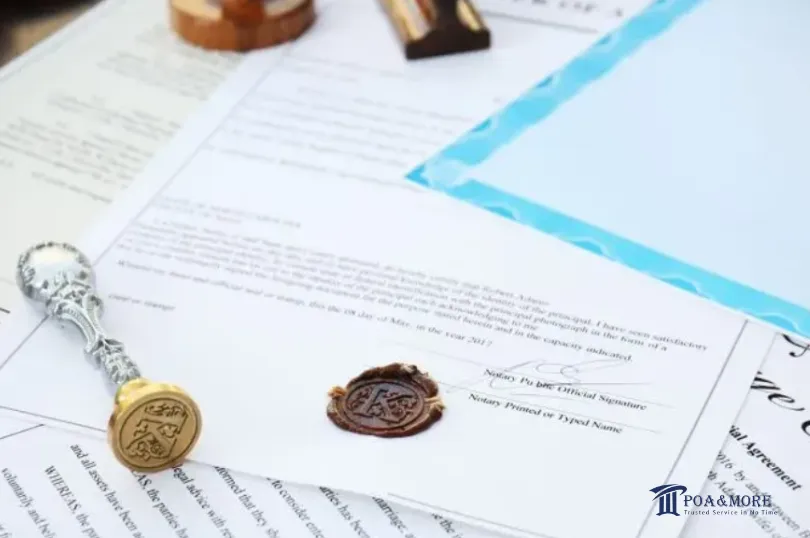
Attestation in the UAE is a crucial step to ensure the legality of documents, whether issued domestically for use abroad or internationally for local use. The key difference lies in the type of document and the issuing authority. Here’s a detailed guide explaining the differences between the main authorities and their procedures to avoid Certificate attestation rejected UAE:
Ministry of Foreign Affairs (MOFA)
- This is the final and most common authority for attestation. Its role is to verify the authenticity of previous seals and signatures on the document.
- When do you need it? For almost all international transactions (work visas, residency permits, opening bank accounts for foreign companies, and attestation of university degrees).
- Types of documents: Academic certificates, birth and marriage certificates, commercial contracts, and certificates of good conduct.
- Procedure: Often done entirely digitally via the Ministry’s app or website, with documents received and delivered through approved courier companies.
Ministry of Justice (MOJ)
- The Ministry of Justice primarily handles documents of a legal nature or those that have undergone translation.
- When do you need it? 1. When the document is translated (the legal translator’s seal must be attested). 2. For legal documents issued by courts or notaries public (such as powers of attorney “POAs”).
- Types of documents: Powers of attorney, articles of incorporation, declarations of assignment, and legally translated documents.
- Procedure: Sometimes requires appearing before a notary public or submitting an application through the Ministry of Justice’s online portal to authenticate the translator’s or notary’s signature.
Other authorities (sectoral Notarization)
Before going to the Ministry of Foreign Affairs, you may need to have the document authenticated by the issuing authority:
- Ministry of Education: For academic certificates issued within the UAE.
- Ministry of Health and Prevention: For birth certificates and local medical reports.
- Chamber of Commerce and Industry: For commercial invoices and certificates of origin.
If your certificate attestation was rejected in the UAE, it’s important to understand the correct Procedure for Certificate Attestation in Dubai to avoid delays. The process typically starts with notarization in the country of origin, followed by authentication from the Ministry of Foreign Affairs there, then UAE Embassy attestation. After arriving in Dubai, the document must be stamped by the UAE Ministry of Foreign Affairs (MOFA). Any mismatch in names, missing seals, or damaged documents can result in rejection, so reviewing each step carefully is essential.
How POA&More Can Assist in Resolving and Preventing Certificate Attestation Rejections?

POA&More specializes in providing comprehensive solutions to overcome the complexities of document and certificate attestation in the UAE. Their strength lies in acting as a liaison between the client and various official entities, minimizing the likelihood of a Certificate attestation rejected UAE due to technical or procedural reasons. Here’s how they can help you resolve and avoid the issue of a Certificate attestation rejected UAE:
1. Diagnosing and Addressing Reasons for Rejection
If your application is rejected, the company reviews the “Certificate attestation rejected UAE” notes from the Ministry of Foreign Affairs (MoFA) or embassies and works to rectify them. The most common reasons include:
- Incomplete Sequence of Attestations: Ensuring the presence of the required stamps from the issuing authorities (e.g., Ministry of Education, then Ministry of Foreign Affairs, then UAE Embassy).
- Data Errors: Addressing any discrepancies in names or dates between the certificate and the passport.
- Lamination Issues: The company advises and assists with laminated documents, as these are often the sites of rejected stamps.
2. Pre-Check Documents
To avoid Certificate attestation rejected UAE from the outset, the company offers a comprehensive pre-submission check service:
- Seal Verification: Ensuring that all current seals are authentic, up-to-date, and meet the standards of the UAE Ministry of Foreign Affairs.
- Document Quality Assessment: Ensuring that the certificate is not damaged or illegible, which could lead to rejection in the digital system.
3. Certified Legal Translation Services
A common reason for rejection is submitting an uncertified translation or one in an unacceptable language. POA&More provides legal translations that comply with the standards of the UAE Ministry of Justice, guaranteeing immediate acceptance by government entities.
4. End-to-End Process Management
Instead of you having to navigate between consulates and ministries, the company handles:
- Notarization in the Country of Issue: Through their network of partners, they can complete the attestation process in the countries of origin (e.g., India, UK, USA, etc.) without your need to travel.
- Notarization within the UAE: Completing the process through the Ministry of Foreign Affairs’ electronic system (eDAS) and paying the fees on your behalf.
5. Legal advice for the type of “Power of Attorney” (POA)
Since the company specializes in “Power of Attorney”, it ensures that the text of the power of attorney is written in a legal format that prevents its rejection by the notary public or the UAE courts, which is what many people fall into when writing the power of attorney themselves.
If you are dealing with a rejected document, understanding the requirements for Power of Attorney Attestation in Dubai is crucial. A Power of Attorney (POA) must first be notarized in the country of origin, then attested by the relevant foreign affairs authority, and legalized by the UAE Embassy. Once in Dubai, it must be stamped by the Ministry of Foreign Affairs. Any errors in signatures, passport details, or missing official seals can lead to rejection, so accuracy at every stage is essential.
Frequently asked questions
Why was my certificate attestation rejected in UAE?
Certificate attestation rejected UAE is often due to procedural or technical reasons related to the document’s authenticity or the sequence of seals. Here are the most prominent reasons that may lead to your application being rejected:
1. Insufficient Prior Attestations (Hierarchy)
This is the most common reason. For the UAE Ministry of Foreign Affairs to attest a certificate issued outside the country, it must first go through the following stages:
- Attestation by the Ministry of Education in the issuing country.
- Attestation by the Ministry of Foreign Affairs in the issuing country.
- Attestation by the UAE Embassy in the issuing country.
2. Document Condition (External Appearance)
- Lamination: Official authorities refuse to attest “heat-laminated” certificates because the seal must be placed directly on the original paper.
- Damage or Illness: Tears, liquid stains, or faded seals that are difficult to read.
- Alteration: Any scratching or manual alteration of the data.
3. Lack of Recognition of the Educational Institution
- If the university is not recognized by the UAE Ministry of Education.
- Certificates issued through distance learning or enrollment in certain specializations, or from universities not accredited for this system.
4. Data and Translation Errors
- Name Discrepancies: Even a slight difference in spelling between the certificate and the passport.
- Uncertified Translation: If the certificate is in a language other than Arabic or English, it must be translated by a legal translator accredited by the UAE Ministry of Justice.
5. Technical or Administrative Reasons
- Submitting a copy instead of the original certificate (in most cases, the original is required).
- Failure to pay the required fees correctly through the electronic system.
- Uploading unclear scans when applying via the smart application.
Can I resubmit a rejected attestation certificate?
Yes, you can definitely resubmit your certificate attestation application after it has been Certificate attestation rejected UAE. Rejection is often due to a procedural or technical issue and is not final, provided the reason for the initial rejection is addressed. Here are the practical steps and common scenarios for dealing with this situation:
1. Determining the Reason for Rejection (Most Important Step)
When your Certificate attestation rejected UAE through the Ministry of Foreign Affairs (MOFA) or Ministry of Education system, you will receive a notification (via email or app) explaining the reason. The most common reasons include:
- Missing Attestation Chain: The certificate lacks the stamp of the issuing country’s Ministry of Foreign Affairs or the UAE embassy there.
- Translation Issues: The certificate is in a language other than Arabic or English and is not accompanied by a certified legal translation.
- Document Clarity: The scanned copy is unclear or the stamps are illegible.
- Laminated: Laminated certificates are rejected for attestation.
- Incorrect Information: There is a discrepancy between the name on the certificate and the passport.
2. Resubmission Procedures
- Correcting the Error: If the reason is a missing stamp, the stamp must be obtained first. If the issue is image clarity, re-scan the image with a high-quality scanner.
- Submitting a new application: In most electronic systems (such as the Ministry of Foreign Affairs’ eDAS 2.0 system), you will need to create a new application and pay the fees again (except in rare cases related to technical errors within the system itself).
- Refund of previous fees: Attestation fees are usually non-refundable if the rejection is due to an error on the part of the applicant. However, in certain cases, a refund may be issued within 14 business days if the application is not ultimately processed.
3. Tips to avoid repeated rejections:
- The correct sequence: Ensure the certificate has been processed by (your country’s Ministry of Education, then your country’s Ministry of Foreign Affairs, then the UAE Embassy in your country, and finally the UAE Ministry of Foreign Affairs).
- Using your digital ID (UAE Pass): This makes it easier to track and modify applications.
- Verifying the certificate’s status: Ensure the certificate is original and not a photocopy, as photos are only attested if they are officially certified “fair copy”.
How can I avoid certificate attestation rejection in UAE?
Avoiding a Certificate attestation rejected UAE requires meticulous adherence to the attestation hierarchy and compliance with the document’s formal requirements. Here’s a roadmap to avoiding a Certificate attestation rejected UAE:
1. Follow the correct attestation order.
You cannot go directly to the UAE Ministry of Foreign Affairs. The certificate (if issued outside the UAE) must go through the following steps in order:
- Ministry of Higher Education (or issuing authority) in your home country.
- Ministry of Foreign Affairs in your home country.
- UAE Embassy or Consulate in your home country.
- UAE Ministry of Foreign Affairs (MOFA) within the UAE (this is the final stage).
2. Certificate formal requirements.
Ensure your document meets the technical requirements of the Ministry:
- No lamination: Any laminated certificate will be rejected because the seals must be applied directly to the paper.
- Clear seals: Ensure all seals are clear and not faded. Legal Translation: If the certificate is in a language other than Arabic or English, it must be translated by a legal translator accredited by the UAE Ministry of Justice, and the translation must be certified.
3. Certificate Data Verification:
Data matching is a common pitfall:
- Name Matching: The name on the certificate must exactly match the name on the passport (literally).
- Institutional Recognition: Ensure that the university or school is recognized by the UAE Ministry of Education (especially for certificates issued through distance learning, which are subject to stricter standards).
Need Legal Help in Dubai?
Our team of legal experts is ready to assist you with Online Power of Attorney services quickly and securely.
.
Contact us now and get a Free Legal Consultation!