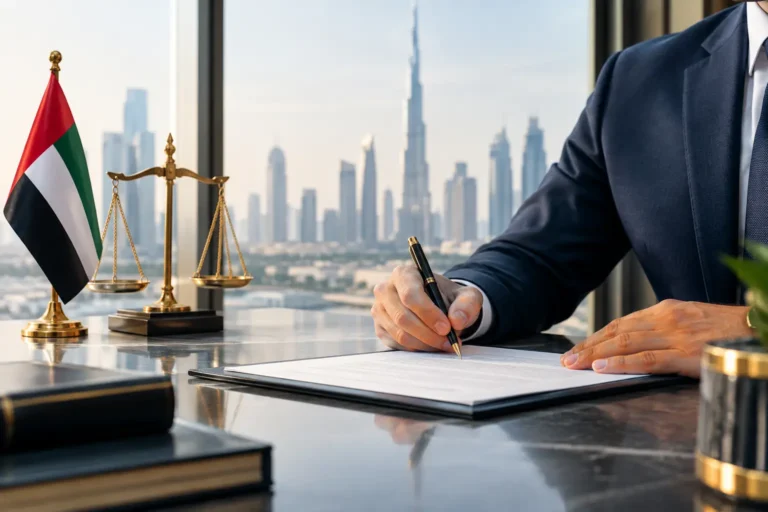
A property can be fully paid for, properly registered and still become difficult for a family to access after its owner dies. The phrase “Dubai property inheritance and Dubai property will, real estate succession UAE” usually arises when an owner or heir needs certainty quickly. The practical answer is simple: ownership records matter, but a properly structured and registered will give your family clearer instructions and can reduce avoidable delay.
For expatriates, overseas investors and busy residents, succession planning should be completed while documents are accessible and decisions can be made calmly. It is far easier to identify the right heirs, appoint an executor and deal with a mortgage before a bereavement than during a court process.
What happens to Dubai property when an owner dies?
A deceased owner’s Dubai property does not automatically pass to the person named in a private note, named on a bank account, or living in the home. The estate must go through the relevant UAE succession and probate process before the ownership position can be updated with the appropriate property authority or developer.
The result depends on several factors, including the owner’s religion, nationality, marital and family circumstances, the location and type of asset, and whether a valid will has been registered through an appropriate UAE channel. The competent court will determine the applicable process and evidence required in the individual case.
For Muslim owners, inheritance is generally governed by Sharia-based succession principles. For non-Muslims, UAE civil personal status provisions and a properly registered will can offer greater control over how eligible UAE assets are distributed. This does not mean every will is automatically accepted or that every provision will apply exactly as written. Wording, registration, capacity, asset details and supporting documents all matter.
Where there is no suitable will, heirs may need to obtain a legal inheritance determination. This can create uncertainty where relatives live in different countries, names appear differently across passports and title deeds, or there are children from a previous marriage. It may also make a property sale, refinance or transfer far slower than expected.
Why a Dubai property will give heirs clearer direction
A Dubai property will is not simply a statement of who should receive a flat or villa. It is a legal planning document that should identify the person making the will, the intended beneficiaries, an executor and the assets being dealt with. For many non-Muslim owners, it also provides a clear record that their UAE real estate should pass according to their wishes rather than leaving relatives to establish intent after death.
A well-drafted will can address whether a beneficiary receives a specific property, a percentage share, or the sale proceeds. It can also cover the practical authority needed to administer the estate. That is particularly helpful where the property is held as an investment, has tenants, is off-plan, or forms part of a wider UAE asset portfolio.
The right registration route depends on your circumstances. Non-Muslims may consider channels such as the DIFC Wills Service Centre, Dubai Courts or Abu Dhabi Judicial Department processes, subject to the eligibility rules and scope of each service. The most suitable option is not always the most familiar one. It depends on your residence status, where assets are located, whether you need guardianship provisions and the type of instructions you want included.
A will should be prepared carefully rather than copied from an overseas template. A document that works in another country may not contain the information or formalities needed for use in the UAE. If it has been signed abroad, it may require legalisation, attestation and certified legal translation before it can be assessed locally.
Real estate succession in the UAE: details that should not be missed
Property succession is often delayed by small omissions that seemed harmless at the time of purchase. A complete review should capture the title deed or unit details, plot or property reference, the owner’s exact name as recorded, and the percentage owned. If there is more than one owner, each person should understand what their share means for succession.
Joint ownership should not be treated as an automatic right of survivorship. The surviving co-owner may retain their own share, but the deceased person’s share can still form part of their estate and require a succession process. Couples who assume that a jointly owned home will transfer automatically can leave an unexpected administrative burden for the survivor.
Mortgaged properties require further planning. A lender may have rights or requirements following the borrower’s death, and outstanding finance must be addressed before a transfer or sale can proceed. Life cover connected to the mortgage may help, but it should not be assumed to resolve title transfer, probate or beneficiary issues by itself.
Off-plan properties also deserve specific attention. The will should identify the project, developer, unit reference and contractual interest. If instalments remain payable, the executor and beneficiaries need to understand whether the estate has sufficient funds to continue payments, whether the contract may be assigned, and what happens if a sale is preferred.
A Power of Attorney is useful, but it ends on death
A Property Power of Attorney can be valuable while you are alive. It may allow a trusted representative to sign property documents, manage a tenancy or complete a transaction when you are overseas, provided its wording and authority are suitable for the task. It is not, however, a substitute for succession planning.
A Power of Attorney generally ceases when the principal dies. An attorney cannot use it to sell, transfer or manage the deceased owner’s property after that point. The executor or legally recognised heirs must instead follow the estate process. This distinction is crucial for overseas owners who believe an existing POA will allow their family to deal with a Dubai property indefinitely.
What heirs may need to do after a death
The exact procedure varies, but heirs should expect to collect formal evidence before a property can be transferred or sold. This commonly includes the death certificate, passports and Emirates IDs where available, marriage or birth certificates proving family relationships, the title deed or sale agreement, mortgage information and the registered will.
Documents issued outside the UAE may need attestation and legal translation into Arabic. Inconsistent spellings, expired documents and missing certificates can all cause avoidable delay. Once the relevant court order, probate decision or inheritance certificate has been obtained, the estate representative can approach the property authority, developer and lender as required.
No heir should sign a sale agreement, accept a buyer’s deposit or rely on informal family consent before confirming their legal authority. A property may appear straightforward, but an unregistered inherited transfer can become complicated if there is a mortgage, a minor beneficiary, an overseas heir or a dispute over the will.
How to prepare now without making the process complicated
Start by creating a clear record of every UAE asset, not just the family home. Include completed properties, off-plan units, land interests, jointly owned units and any property held through a company. Check that names, passport numbers and ownership percentages match the underlying documents.
Next, decide what should happen to each property. One child may be better served by receiving rental income, while another may prefer a cash share from a sale. If your intention is for a spouse to remain in the home, say so clearly and consider how mortgage payments, service charges and ownership transfer will be handled.
Choose an executor who is dependable, available and able to manage documentation. This can be a relative or another appropriate person, but the appointment should be realistic. An executor based abroad may still act, although practical document and travel requirements should be considered early.
Finally, have the will drafted for your actual assets and registered through the correct route. POA&More can assist non-Muslim clients with will preparation, legal translation and document support so that the process is handled efficiently and with the required formalities. A short review now can give your family a far clearer route through an otherwise demanding time.
Need Legal Help in Dubai?
Our team of legal experts is ready to assist you with Online Power of Attorney services quickly and securely.
.
Contact us now and get a Free Legal Consultation!