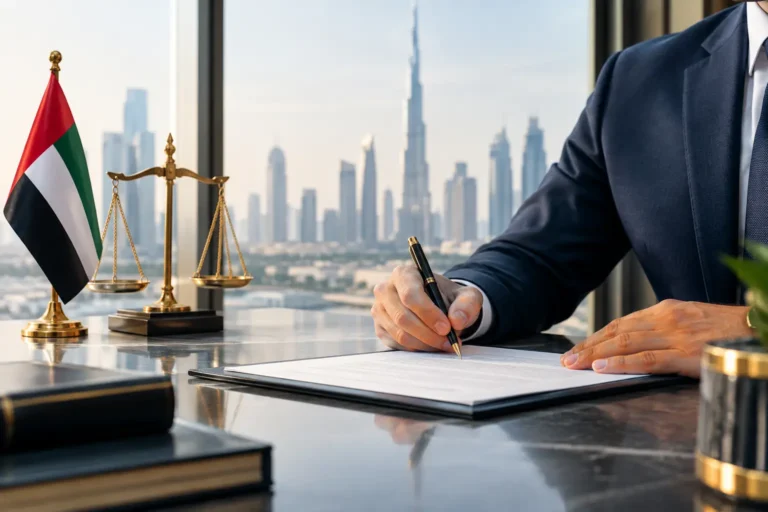
A family emergency is not the time to discover that your children’s care, access to funds and inheritance arrangements were never formally recorded. When considering guardianship in a UAE will and children’s inheritance in the UAE, expatriate parents need more than a general statement of intent. They need a correctly drafted, properly registered will that reflects their family circumstances and can be acted on when it matters.
For parents living in the UAE, a will can provide vital direction on who should care for minor children, who should administer their estate and how assets should pass to the people they intend to protect. It also reduces uncertainty for relatives who may otherwise need to deal with court processes at an already difficult time.
Why a UAE will matters for parents
Without a valid will, estate administration is governed by the applicable UAE legal framework and the facts of the case. This can affect the distribution of UAE assets, the administration of bank accounts, property and company interests, and the practical arrangements needed to support surviving family members.
For non-Muslims, the UAE has introduced civil-law options that provide greater scope to arrange succession through a will. However, this does not mean any document signed at home, abroad or online will automatically be accepted for every purpose in the UAE. The wording, registration route, asset location, family status and supporting documents all matter.
A will is particularly valuable where you have young children, own property in Dubai or elsewhere in the UAE, hold shares in a business, or have assets in more than one country. It allows you to set out instructions while you have the time and capacity to make considered decisions, rather than leaving loved ones to interpret incomplete information later.
Guardianship in a UAE will: what parents should address
Parents often use the word “guardianship” to mean who will raise their children. Legally, the position can involve several distinct responsibilities, including day-to-day care, legal authority and financial management. A will should therefore be drafted with care rather than simply naming a trusted relative.
Your will can record your preferred guardian or guardians for minor children and explain whether they would be responsible jointly or separately. It should also name at least one substitute guardian. The person you first choose may be unable to travel, unwilling to relocate, affected by illness or no longer suitable by the time the provision is needed.
A court will always retain the power to consider the child’s welfare. Naming a guardian in a will is highly persuasive evidence of the parents’ wishes, but it is not a mechanism for bypassing the court’s responsibility to protect a child’s best interests. This is one reason clear drafting and suitable supporting evidence are so valuable.
When selecting a guardian, think beyond affection and family ties. Consider their relationship with the children, age, health, values, financial stability, ability to obtain a visa or relocate, and whether they could practically care for the children in the UAE or abroad. If the proposed guardian lives overseas, your will should fit with the wider arrangements required for travel, residence and handover of care.
It may also be sensible to distinguish between the person responsible for the children’s personal care and the person trusted to manage inheritance on their behalf. One individual may be right for both roles, but that is not always the case. A financially experienced family member or professional executor may be better placed to oversee assets, while a close relative provides the children with a stable home.
Children’s inheritance in the UAE: more than naming beneficiaries
Minor children can be beneficiaries under a will, but they cannot simply receive and manage significant assets as an adult would. A properly prepared will should deal with who will hold, administer and use those assets until the children reach the relevant age or any later age set out in the arrangement, where permitted.
This is especially relevant if your estate includes a property, rental income, bank balances, investments, insurance proceeds or a business interest. The document should identify what the executor or appointed administrator may do: maintain a property, pay education and healthcare costs, invest funds prudently, settle liabilities and distribute money for the children’s benefit.
A vague instruction such as “everything goes to my children” can leave practical questions unanswered. What happens if one child is still a minor? Should funds be released equally at a particular age? Can money be used for school fees, housing, medical treatment or living expenses before then? Who decides? These issues are best addressed while relationships are harmonious and records are available.
Parents may also wish to provide for a spouse separately. That can be particularly important where one spouse will need immediate financial support to continue caring for the children, while part of the estate is intended to be preserved for the children’s future. The right approach depends on the family’s assets, liabilities, nationality, existing overseas wills and long-term plans.
Choose the right will registration route
Non-Muslims may have different will-registration options in the UAE, including routes associated with the DIFC, Dubai Courts and Abu Dhabi Judicial Department. The appropriate choice depends on the testator’s circumstances, where assets are held, where they live and the nature of the provisions required.
A DIFC will is often considered by non-Muslims who want a common-law-style framework and need provisions concerning guardianship, UAE assets or both. Dubai Courts and ADJD channels may suit other cases, including individuals whose asset profile or residency position calls for a different route. There is no single “best” will for every expatriate family.
The key is to select a route that is available to you, supports the instructions you need and is drafted in the required format. Registration is not an administrative afterthought. It is part of making sure the document can be located and used through the relevant legal process.
Do not overlook assets outside the UAE
A UAE will does not automatically solve succession planning in every country where you own assets. Overseas property, shares, pensions and investments may be subject to local succession rules, tax rules and probate requirements. In some cases, a separate will for another jurisdiction is appropriate.
Multiple wills must be coordinated carefully. A broadly worded revocation clause in a new UAE will could unintentionally cancel an existing foreign will, or the two documents could contain contradictory executor appointments. Your adviser should review the wider estate plan before finalising the wording.
Similarly, life changes should trigger a review. Marriage, divorce, the birth or adoption of a child, the purchase of a property, a move abroad, a change in nationality, or the death of an appointed guardian or executor can all make an older will unsuitable. Reviewing the document every few years, and after any major change, is a practical safeguard.
Information to prepare before drafting
A fast and accurate will process starts with complete information. You will normally need passport and Emirates ID details, copies of relevant marriage and birth certificates, details of your proposed guardians and substitutes, and a clear list of UAE assets and liabilities. If you own property or a business, keep title documents, shareholding information and any financing details available.
You should also decide who will act as executor. This person is responsible for carrying out the will, dealing with the estate and working through the required process. Choose someone dependable, willing to serve and capable of handling administrative responsibilities. An executor should know where the registered will and key documents are kept, although they do not need to know every personal detail of your estate.
Translation can be critical where documents are issued in another language or a chosen registration channel requires particular language formalities. Errors in names, passport numbers, property descriptions or beneficiary details can create avoidable delays, so consistency across documents matters.
Make the arrangements clear before they are urgent
A will for parents is not only an inheritance document. It is a practical plan for continuity: who cares for the children, who manages the money and how the family is supported while formal estate matters are resolved.
POA&More can help non-Muslim clients prepare and process suitable UAE will documentation through the appropriate channel, with clear drafting support and attention to registration requirements. Before signing anything, take time to confirm your guardian choices, beneficiary instructions and asset details. A carefully prepared will gives your family clear direction when they need it most.
Need Legal Help in Dubai?
Our team of legal experts is ready to assist you with Online Power of Attorney services quickly and securely.
.
Contact us now and get a Free Legal Consultation!