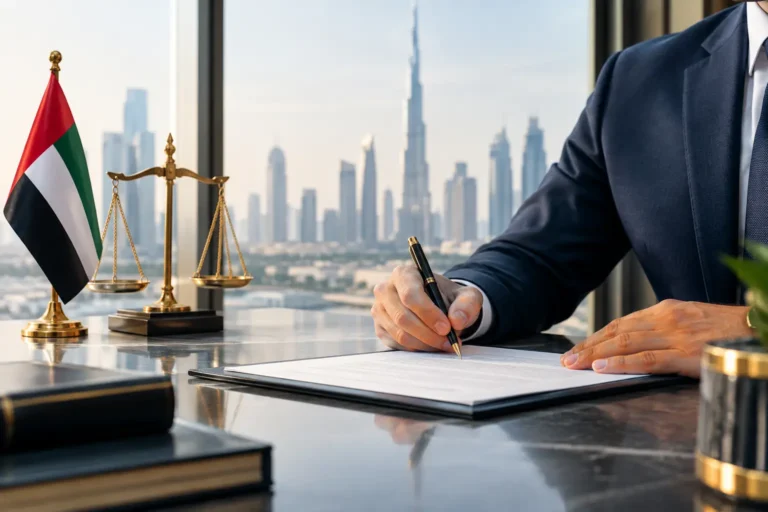
A home in Dubai, a bank account, shares in a local business or simply the responsibility of caring for children can create difficult questions if a person dies without clear instructions. Dubai Courts wills give eligible non-Muslims a recognised route to record how they want their UAE estate handled and, where applicable, whom they wish to nominate as guardians for minor children.
For many expatriates, the issue is not a lack of intention. It is assuming that a will signed overseas will automatically deal with assets and family arrangements in the UAE. Cross-border estates are rarely that straightforward. A properly prepared and registered local will can reduce uncertainty at a time when families need clarity most.
What are Dubai Courts wills?
Dubai Courts wills are wills registered through Dubai Courts for non-Muslims who wish to document their succession wishes under the relevant UAE legal framework. They can address UAE-based assets and, depending on the document and the person’s circumstances, may also be drafted to cover wider assets.
The value of registration is practical as well as legal. It creates a formal record with the relevant authority, making it easier for the executor and family to establish that a valid will exists. It also allows the document to be prepared in a format suitable for local procedures, rather than leaving relatives to interpret a foreign document after a death.
A Dubai Courts will is not interchangeable with every other will option in the UAE. DIFC Courts Wills Service and Abu Dhabi Judicial Department processes have their own rules, scope, fees and registration requirements. The right route depends on matters such as where you live, the location and nature of your assets, your family arrangements and the coverage you need.
Why a local will can matter for expatriates
A will is often viewed as a document for people with extensive wealth. In practice, it can be equally relevant for a resident with a jointly owned property, a savings account, a vehicle, company interests or young children.
Without a valid will that is effective in the UAE, estate administration may be governed by applicable UAE succession rules and court procedures. This can create delays, additional documentation and outcomes that do not reflect your preferences. Family members may need to obtain legalised records from abroad, arrange certified translations and deal with several authorities while managing a bereavement.
For parents, guardianship is usually the most urgent consideration. A will can state your preferred guardian for minor children and include an alternate nomination. This does not remove the court’s authority to decide what is in a child’s best interests, but it gives the court clear evidence of the parents’ wishes.
A locally registered will can also help where assets are held in more than one person’s name. Joint ownership does not always mean an asset passes automatically to the surviving owner in the way people expect. The ownership structure, the asset type and the applicable legal process all matter.
What can a Dubai Courts will cover?
The precise content should be tailored to your situation, but a carefully drafted will commonly identifies the testator, revokes earlier inconsistent wills, appoints an executor and sets out how assets should be distributed. It may also contain guardianship provisions for minor children.
Your asset schedule should be clear enough to minimise ambiguity. That may include Dubai property details, bank accounts, vehicles, shareholdings, business interests, personal belongings and any debts or liabilities that need to be considered. A will does not transfer assets during your lifetime. It takes effect only after death, so it should work alongside rather than replace sensible lifetime planning.
Some clients prefer a UAE-focused will that deals only with assets and arrangements in the country, while keeping a separate will for their home country or other jurisdictions. Others seek one document with broader coverage. Neither approach is automatically better. Multiple wills must be coordinated carefully so that one does not accidentally revoke another, and each must meet the formalities of the place where it may be used.
The drafting stage is where errors are avoided
Using a generic template can appear economical, but it can produce gaps that are expensive for a family to resolve later. An unclear executor appointment, an outdated property description or conflicting worldwide clauses can all create avoidable complications.
Before drafting, gather accurate information about your passport and Emirates ID, marital status, children, assets, liabilities and existing wills. If your marriage certificate, birth certificates or supporting documents are issued outside the UAE, consider whether legalisation and certified legal translation may be required for future use. Arabic can be particularly important in UAE court-related procedures, so translation should be handled with legal accuracy rather than as a routine administrative task.
You should also consider who can realistically act as executor. The person needs to be trusted, capable and willing to deal with formalities. Naming an alternative executor is sensible in case the first choice is unable or unwilling to act.
Registration is not simply a formality
Once the will is drafted, it needs to be reviewed for consistency and prepared in the required form for registration. Requirements can change, and eligibility, document format, identity verification, language and attendance arrangements should be checked before booking.
The registration appointment is the point at which the testator confirms the document as their will before the relevant authority. Depending on the current process and the individual circumstances, this may involve an in-person step, a remote arrangement or additional supporting paperwork. Do not sign a final version prematurely if the applicable process requires signing in a particular way or before an authorised official.
After registration, keep the registration details and a secure copy where your executor can find them. There is no benefit in a perfectly drafted will if nobody knows it exists. You do not necessarily need to provide every beneficiary with a full copy, but your executor and a trusted close family member should know where the original record and supporting documents are held.
When should you update your will?
A will should be reviewed after a major life or asset change. Marriage, divorce, the birth or adoption of a child, a property purchase, a new business, relocation, a change in nationality or the death of an executor or beneficiary can all affect whether the document still reflects your intentions.
Reviewing does not always mean rewriting. Sometimes a short update is appropriate; in other situations, replacing the document is safer. What matters is avoiding contradictory versions. If you have wills in other countries, any amendment should be checked against them before it is finalised.
It is also wise to review a will when you change ownership arrangements or sell an asset mentioned by name. Specific gifts can fail or cause confusion if the asset no longer exists in the estate. Clear drafting can anticipate this, but an occasional review remains the simplest safeguard.
Choosing the right will route
Dubai Courts may be the appropriate choice for many non-Muslims, but the decision should not be based on cost alone. Registration fees, service speed and convenience matter, yet the legal scope and your personal circumstances matter more.
For example, a Dubai resident with local property and minor children may prioritise clear guardianship language and UAE asset coverage. An overseas investor may need a document that fits their wider estate plan without disrupting wills in other jurisdictions. An entrepreneur may need careful treatment of company shares, succession provisions in shareholder agreements and business continuity arrangements.
This is why an initial document review is valuable. It identifies the assets involved, the people who need protection and any conflicts between UAE and foreign documents before the registration stage. The goal is not to add complexity. It is to prevent an apparently simple will from creating uncertainty later.
A practical way to move forward
Start by listing your UAE assets, your preferred beneficiaries, your executor and any proposed guardians. Then bring together existing wills and key family documents so the full position can be assessed. If anything is unclear, resolve it before signing rather than leaving your family to interpret your intentions later.
POA&More can support eligible clients with clear drafting, legal translation, document preparation and registration coordination for Dubai Courts wills. The process is designed to be efficient, confidential and aligned with the relevant formalities, including for clients managing their affairs from abroad.
The most useful time to prepare a will is when you can make decisions calmly. A clear, properly registered document gives the people you trust a practical starting point when they may need it most.
Need Legal Help in Dubai?
Our team of legal experts is ready to assist you with Online Power of Attorney services quickly and securely.
.
Contact us now and get a Free Legal Consultation!