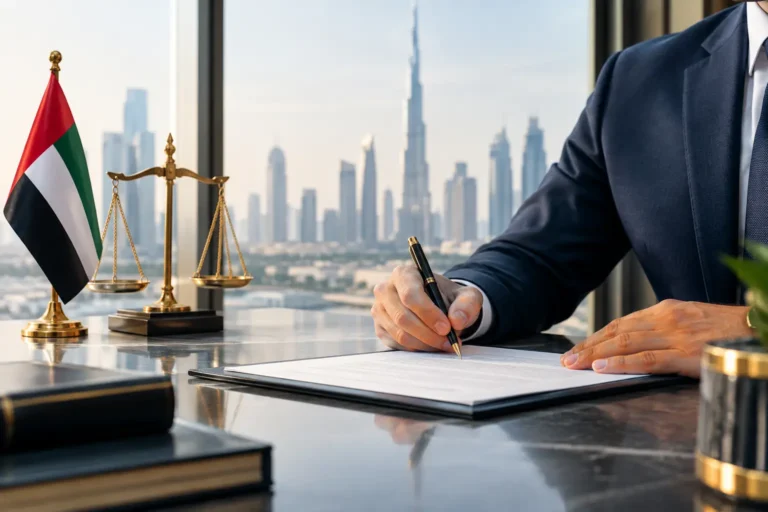
For many expatriates, the first search is simply “non-Muslim will services Dubai”. The real question is more personal: if something happens unexpectedly, will your family be able to act quickly, access your assets and follow your wishes without avoidable legal uncertainty? A properly drafted and registered non-Muslim will provides a clear legal record of those wishes.
This is not paperwork to leave until a property purchase, a new child or a medical emergency forces the issue. For residents, investors and overseas owners with UAE assets, a will is a practical safeguard that can reduce delays and give executors a clear starting point when it matters most.
Why a non-Muslim will matters in Dubai and the UAE
A will allows a non-Muslim individual to set out how eligible UAE assets should be distributed and who should be responsible for administering the estate. Depending on the chosen registration route and the circumstances, it can also record guardianship wishes for minor children, appoint executors and address practical matters such as bank accounts, property, shares and personal belongings.
Without a will, family members may face a more complicated process when dealing with an estate. This can be particularly difficult where assets are held in the UAE but relatives live abroad, or where documents from several countries need legal translation, certification or attestation. Clear instructions drafted for the relevant UAE process help reduce ambiguity from the outset.
A will for expats in Dubai is especially valuable because many families have cross-border lives. You may have a spouse in the UAE, children at school locally, a flat in another country, investments in several jurisdictions and relatives who cannot travel at short notice. A UAE will should be considered alongside any wills held elsewhere, so that documents do not unintentionally conflict.
Choosing the right non-Muslim will registration route
There is no single will format that is right for every person. The most suitable route depends on your residency status, nationality, family position, assets, the location of those assets and the scope of the will you need.
Non-Muslim will registration may be available through channels including DIFC Courts, Dubai Courts and Abu Dhabi Judicial Department (ADJD), subject to their current rules, eligibility requirements and procedures. Each route has its own registration framework, document standards, fees and practical considerations. A specialist should assess your circumstances before recommending where to register.
DIFC wills
DIFC wills are often considered by non-Muslim expatriates who want a well-established common-law-style registration option. The appropriate DIFC will type will depend on the assets and family matters it is intended to cover. It is essential that the document is drafted to meet the relevant requirements and that names, passport details, asset descriptions and appointments are consistent throughout.
Dubai Courts wills
Dubai Courts may offer a suitable option for individuals who require a locally registered will through the Dubai judicial system. The process can involve specific drafting, language and registration requirements. Where an Arabic version or legal translation is required, accuracy is not a formality. A mistranslated name, ownership detail or instruction can cause unnecessary issues later.
ADJD wills
ADJD provides another important UAE registration channel for eligible non-Muslims. It may be relevant for individuals with assets or family connections in Abu Dhabi, as well as those seeking a UAE-based route outside Dubai. The best choice is not necessarily the closest authority. It is the route that fits your estate, your family arrangements and the assets you want the will to cover.
What should your will deal with?
A useful will is specific enough to guide those left behind, but flexible enough to remain sensible as circumstances change. Your estate plan may need to address UAE real estate, bank accounts, vehicles, company shares, valuable possessions and digital or financial records. It should also identify beneficiaries clearly and appoint people you trust to act as executors.
For parents, guardianship provisions are often the most urgent part of the discussion. A will can record your wishes about who should care for minor children if both parents are unable to do so. However, guardianship is a serious legal matter and the relevant authority will consider the child’s best interests. Your appointment should therefore be carefully drafted and supported by practical planning, including whether the proposed guardian is willing and able to take on the role.
Business owners should also consider what happens to company interests, signing authority and continuity arrangements. A will can form part of wider planning, but it does not replace corporate documents, shareholder agreements or properly structured succession arrangements. Similarly, property held jointly, assets owned through a company and accounts with beneficiary arrangements may require a closer review before instructions are finalised.
The details that make a will legally stronger
Most will problems are not caused by dramatic disputes. They arise from small inconsistencies: an outdated passport number, a property described incorrectly, a beneficiary named vaguely, or a previous will that was never revoked or reviewed.
Before drafting, gather accurate identification documents and a current list of relevant UAE assets. Confirm legal names exactly as they appear on passports and official ownership records. If you have a marriage certificate, children’s birth certificates, title deeds, share certificates or overseas estate documents, keep them available for review where relevant.
You should also disclose previous wills and any existing powers of attorney. A Power of Attorney and a will serve different purposes. A POA usually allows someone to act on your behalf while you are alive and legally capable; it generally does not continue after death. A will takes effect after death. Treating one as a substitute for the other can create a serious gap in your planning.
A practical process for will services in Dubai
The process should be clear, confidential and built around your circumstances rather than a generic form. It normally begins with a consultation to establish your residency, family position, intended beneficiaries, assets, preferred executors and guardianship wishes. This is also the stage to identify whether the will should be UAE-focused or coordinated with documents in other countries.
The draft should then be prepared in the format required for the selected registration route. You should read it carefully before approval. In particular, check the spelling of every name, the scope of assets covered, replacement executors or guardians, and any clause dealing with previous wills.
Once the wording is agreed, the registration appointment and supporting documents can be organised. Some stages may be handled remotely or with digital support, while identity verification and registration formalities will depend on the authority and its current procedures. A dependable provider will explain what must be done personally, what can be prepared in advance and what timelines are realistic.
POA&More supports non-Muslim wills through DIFC, Dubai Courts and ADJD channels, alongside drafting, legal translation and document-processing support. This can be particularly helpful for busy clients who need one coordinated point of contact rather than separate providers for each administrative step.
When should you update a non-Muslim will in the UAE?
Registration is not the final task. Your will should be reviewed after significant life or asset changes, including marriage, divorce, the birth or adoption of a child, a change of guardian or executor, a property sale or purchase, a new business interest, or a move away from the UAE.
A review is also sensible if you acquire assets in another emirate or country. A will written for one situation may need amendment when your estate becomes more complex. Do not make handwritten changes to a registered will and assume they will be effective. Changes should be made through the appropriate legal process for the registration route used.
The right non-Muslim will is not about predicting every future event. It is about giving your family clear, legally prepared instructions today, then keeping those instructions aligned with the life you build in the UAE.
Need Legal Help in Dubai?
Our team of legal experts is ready to assist you with Online Power of Attorney services quickly and securely.
.
Contact us now and get a Free Legal Consultation!