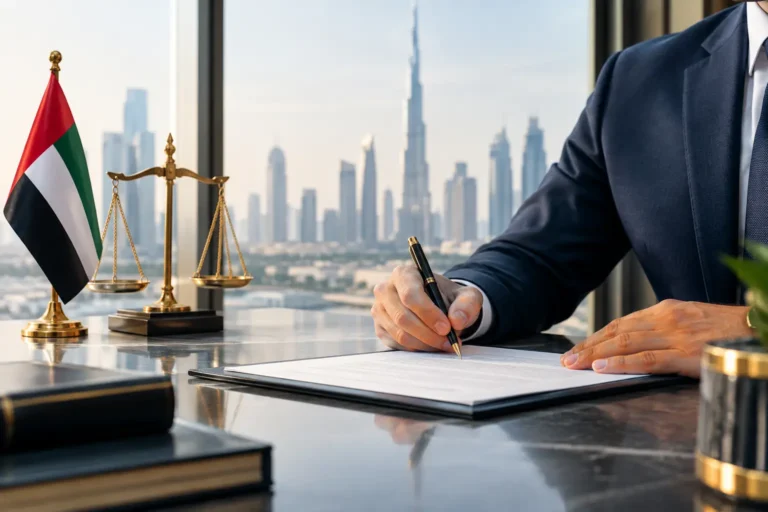
A will is not merely a document for later. For expatriate families, investors and property owners, it is a practical instruction that can reduce uncertainty at the most difficult time. If you are researching how to make a will in Dubai, the priority is to create a legally appropriate document that clearly records who should receive your UAE assets, who should manage your estate, and who should care for your children if needed.
For non-Muslims, a properly registered will can provide greater certainty over the distribution of UAE-based assets and guardianship wishes. The right route depends on your circumstances, the assets you hold, where they are located, and the authority through which you register.
Why a non-Muslim will in Dubai matters
Without a will, estate administration may be more complex and slower for those left behind. Bank accounts, property, vehicles, shares and other UAE assets can be affected while the estate is being assessed and processed. Where minor children are involved, clear guardianship provisions are particularly important.
A non-Muslim will in Dubai gives you the opportunity to state your intentions in writing rather than leaving key decisions open to interpretation. It can cover UAE property, bank accounts, personal belongings, company interests and, where appropriate, assets elsewhere. It can also appoint executors to administer the estate and guardians for minor children.
A will is especially relevant if you are an expatriate whose family lives in the UAE, own a flat or other property, hold business interests, or have dependants who may need immediate support. It is not just for high-net-worth individuals. Anyone with assets, children or clear wishes about succession can benefit from putting instructions in place.
Choose the right UAE will process
The UAE will process is not identical for every person. Non-Muslims may consider registration channels including DIFC Courts, Dubai Courts or Abu Dhabi Judicial Department, depending on their residence, assets and intended scope. Each route has its own eligibility requirements, format, fees, registration procedures and practical advantages.
A DIFC will is commonly considered by non-Muslims seeking a clear framework for assets and guardianship matters. Dubai Courts may be suitable for people requiring a locally registered will through the Dubai judicial system. ADJD provides another established route, particularly where a client’s circumstances, assets or location make that channel appropriate.
The best choice should not be based on price alone. A lower initial fee is of little value if the document does not cover the correct assets, uses unclear wording or is registered through a route that does not suit your circumstances. Before proceeding, consider where your assets are held, whether you own property in more than one emirate, whether you need guardianship clauses, and whether you already have a will in another country.
An overseas will may not automatically deal with UAE assets in the way you expect. Equally, a UAE will should be reviewed alongside any will made abroad to avoid accidental conflict or revocation. This is one of the areas where careful will drafting in Dubai makes a meaningful difference.
How to prepare a will in Dubai
To prepare a will in Dubai properly, start by creating an accurate picture of what you own and what you want to happen. Avoid copying a generic template. A will must reflect your family structure, asset position and chosen registration route.
First, identify the people you want to protect. This usually includes your spouse, children, parents or other beneficiaries. Decide the exact share or item each beneficiary should receive. Vague instructions such as ‘divide everything fairly’ can create unnecessary dispute and delay.
Next, list your material assets. This may include UAE property, bank accounts, vehicles, jewellery, investments, business shares and personal possessions. You do not always need to include account numbers or every low-value item in the will itself, but your estate plan should be detailed enough for your executor to identify the assets and follow your intentions.
You should then appoint an executor. This is the person, or in some cases professional entity, responsible for handling the estate, dealing with formalities and distributing assets in accordance with the will. Choose someone dependable, organised and willing to take on the responsibility. It is sensible to name an alternative executor in case the first person cannot act.
Parents of minor children should also address guardianship explicitly. Consider both day-to-day guardianship and financial responsibility. Discuss the appointment with the proposed guardians beforehand. A guardianship provision should be drafted with care, particularly where parents have different nationalities, relatives live overseas, or children have school and residence arrangements in the UAE.
The information normally needed during the drafting stage includes:
- Your passport and Emirates ID, if applicable
- Full names and identification details for beneficiaries, executors and guardians
- Details of UAE assets, property ownership and business interests
- Marriage, divorce or birth certificates where relevant
- Existing wills or estate-planning documents from other countries
Depending on the registration channel, documents may need legal translation or specific supporting evidence. Completing this work early avoids last-minute amendments and missed registration appointments.
What happens during will drafting in Dubai
Professional will drafting in Dubai begins with understanding the objective behind the document, not simply filling in names. For example, a property owner may need to make a precise gift of a particular property, while an entrepreneur may need provisions that reflect company ownership, successor arrangements and the practical needs of the business after death.
The draft should specify the testator – the person making the will – and confirm that it revokes earlier wills only to the extent intended. It should name beneficiaries, executors and guardians clearly, describe gifts and residual assets, and include provisions suited to the chosen authority’s requirements.
Language is critical. A missing contingency clause can cause problems if a beneficiary dies before you or a chosen executor is unable to act. Similarly, the will should not make promises that conflict with ownership records, shareholder agreements, mortgage arrangements or jointly held assets. These matters do not always prevent a will from being made, but they may require more tailored drafting.
Once the wording is approved, the will is submitted or presented for registration through the selected channel. Some stages can be arranged remotely, including document collection, drafting, review, translation support and appointment coordination. The final registration requirements, identity checks and attendance rules vary by authority and can change, so they should be confirmed before you rely on a proposed timetable.
Common mistakes that create avoidable problems
The most common mistake is waiting until an urgent event forces the issue. Illness, travel, a property sale or a change in family circumstances can turn a straightforward process into a time-sensitive one. Preparing your will while you have time to review each clause is the safer approach.
Another error is assuming that naming a spouse in a foreign will is enough for all UAE assets. Cross-border estate planning needs a joined-up view. If you have a will in the UK, India, Europe or elsewhere, the UAE document should be considered alongside it rather than in isolation.
People also forget to update their will after marriage, divorce, the birth of a child, an asset purchase, a business change or a move to another emirate. Registration is not the end of the process. Review the document every few years and whenever a major life event changes your intentions.
Finally, do not sign or register a draft you have not read carefully. Check the spelling of names, passport details, property descriptions and beneficiaries’ shares. Small administrative errors can be frustrating to correct later and may cause greater difficulty during estate administration.
A practical way to move forward
The fastest route is usually to gather your documents, confirm your beneficiaries and guardians, and obtain guidance on the registration option that matches your circumstances before drafting begins. This keeps the process focused and avoids repeated revisions.
POA&More can assist non-Muslim clients with will preparation, drafting support, legal translation and coordination for relevant UAE registration channels. The aim is simple: clear instructions, correct documentation and a process managed with confidentiality and care. A well-prepared will gives your family something far more valuable than paperwork – clarity when they need it most.
Need Legal Help in Dubai?
Our team of legal experts is ready to assist you with Online Power of Attorney services quickly and securely.
.
Contact us now and get a Free Legal Consultation!