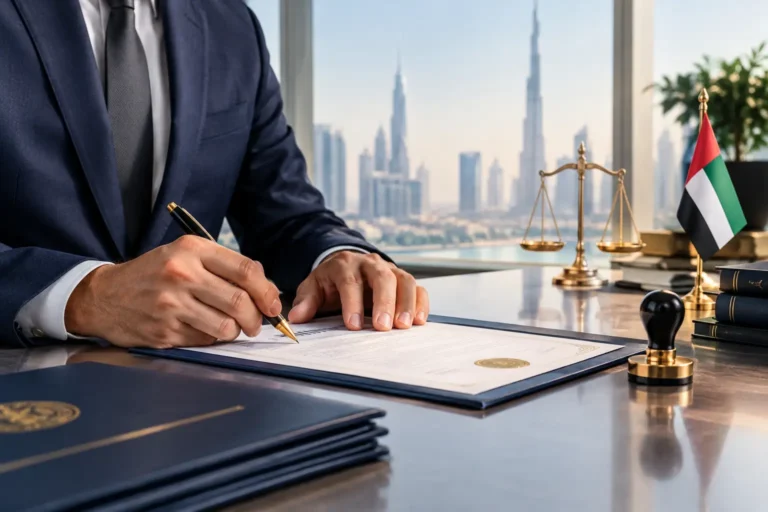
A property sale can move quickly while the owner is in London, Riyadh or travelling for work. A remote property transaction makes this possible, but only when the authority to act, supporting documents and signing process are prepared correctly. In the UAE, convenience does not replace legal formality. It depends on getting the documentation right before a buyer, broker, bank or registration authority needs it.
For overseas owners, busy investors and residents who cannot attend in person, the practical solution is usually a properly drafted Property Power of Attorney. This allows a trusted attorney to complete clearly defined property actions on the owner’s behalf, while the owner retains control over the scope of authority.
What a remote property transaction involves
A remote property transaction is the purchase, sale, transfer, management or related dealing with real estate when one or more parties cannot be physically present for every required step. It may involve an owner abroad selling a Dubai flat, a purchaser appointing someone to sign formal paperwork, or an investor authorising a representative to deal with a mortgage, developer or property transfer process.
The transaction itself is not informal simply because it is handled remotely. Property rights, funds and registration must still be dealt with through the applicable UAE procedures. The remote element is achieved by establishing valid authority, arranging compliant notarisation or attestation where required, and ensuring the representative can present the correct documents at the correct stage.
A Power of Attorney is not a substitute for the sale agreement, transfer documents or authority requirements imposed by the relevant property body. It is the legal instrument that confirms who may act for the owner and what that person is permitted to do.
When a Property Power of Attorney is needed
A Property POA is commonly used where the owner cannot attend a transfer appointment, sign documents in person or deal directly with a developer, trustee office, bank or government department. It can be drafted for a specific transaction or, where appropriate, for a wider range of defined property matters.
The right level of authority matters. A narrowly drafted POA may authorise an attorney to sell one named property to a specified buyer, sign transfer forms and collect sale proceeds in an agreed manner. A broader document may permit property management, tenancy matters, NOCs, utility matters, mortgage procedures and dealings with more than one authority.
Neither approach is automatically better. A specific POA offers tighter control for a single transaction. A broader POA can reduce delays for an owner with ongoing property responsibilities. The sensible choice depends on the property, the intended action, the relationship with the attorney and any requirements from the receiving authority.
Authority should be clear, not assumed
Vague wording creates avoidable problems. If an attorney needs to sign a sale agreement, apply for a developer NOC, represent the owner before the Dubai Land Department, receive a cheque or settle a mortgage, the relevant power should be considered expressly in the drafting.
Names, passport details, Emirates ID details where applicable, property identifiers and the attorney’s authority must be consistent across the supporting paperwork. A small mismatch can delay an appointment at the point when timing matters most.
The documents to prepare before you begin
The paperwork required varies according to the transaction and the parties involved, but preparation should begin before an offer is accepted or a transfer date is fixed. Owners are typically asked for identification documents and property details, while the attorney must also provide accurate identification information.
For a sale or transfer, relevant documents may include the title deed or ownership information, the sale agreement, mortgage information, developer documents, a no-objection certificate where required and details of any outstanding service charges. If a document was issued outside the UAE, it may need legalisation, attestation and, in some cases, certified legal translation before it can be accepted.
Do not assume a scanned copy will be sufficient because it looks official. Authorities, banks, developers and counterparties may have different requirements on originals, certified copies, attestation and translation. Checking early protects the timetable and reduces the risk of a last-minute refusal.
Translation and attestation can affect timing
Many international owners hold documents in languages other than Arabic or English. Where Arabic translation is required for official use, it should be completed by a qualified legal translation provider and reviewed alongside the original document. A translation that omits a name variation, property number or key authority can be as problematic as an error in the original.
Attestation requirements also depend on where the document was signed and how it will be used. A POA executed abroad may require a different route from one prepared for online UAE notarisation. This is why a document should be assessed on its intended use, not copied from a generic template.
A practical remote property transaction process
The first step is to define the transaction precisely. Are you selling, buying, gifting, managing, refinancing or simply collecting documents? The answer determines whether a Property POA is appropriate and how its authority should be framed.
Next, the document is drafted using the correct parties’ details and the relevant property information. The owner should read the powers carefully, particularly clauses relating to sale price, receipt of funds, mortgage settlement, signing rights and the ability to appoint another representative. Giving authority is a serious decision, so the attorney should be someone trustworthy and the scope should reflect the owner’s instructions.
The POA then follows the applicable approval and notarisation process. Depending on the owner’s location and circumstances, this may be completed through an online UAE process or through a signing, legalisation and attestation route abroad. The right route is the one accepted by the authorities involved in the transaction, not necessarily the quickest-looking option.
Once the POA is valid, the attorney can take the authorised actions and provide it when requested by the broker, developer, trustee, bank or registration body. The owner should remain informed at key points, especially before signing binding sale documents, agreeing financial terms or completing transfer arrangements.
Common mistakes that put a transaction at risk
The most frequent issue is using a general POA when a receiving party expects express property authority. A document may be legally executed yet still fail to meet the practical requirements of a particular transaction.
Another risk is appointing an attorney without setting boundaries. If the intention is only to obtain an NOC or attend a transfer appointment, the document should not grant unnecessary powers to sell, receive money or manage other assets. Good drafting protects both the principal and the attorney by making the authority easy to understand.
Timing is equally important. Owners sometimes wait until the buyer is ready, the mortgage release is scheduled or a transfer appointment has been booked. By then, notarisation, attestation, translation or document corrections can create pressure. Starting early allows time to resolve identity discrepancies, update expired documents and confirm the requirements of all parties.
Finally, be cautious with informal assurances. A broker or buyer may be helpful, but they are not responsible for the validity of your POA or for protecting the scope of your authority. Independent document preparation helps ensure the paperwork serves your interests as well as the transaction timetable.
Protecting control when you are overseas
Remote does not need to mean detached. Agree clear instructions with your attorney before the process begins, including the lowest acceptable sale price if relevant, how payments will be handled, which documents may be signed and when you expect to be consulted. Keep copies of the signed POA, supporting documents and transaction correspondence in a secure place.
It is also wise to use a POA only for as long as it is genuinely needed. A document can be drafted with a limited purpose or period where suitable, and it can be cancelled when the authority is no longer required. If your circumstances change, do not assume an old POA is harmless merely because the original transaction has finished.
POA&More supports clients with remotely prepared UAE Power of Attorney documents, legal translation and notary-support coordination, helping owners move forward with clear, compliant paperwork. A short review of the transaction before drafting can prevent far more difficult corrections later.
When a property decision cannot wait for travel plans to align, the best next step is not to rush the paperwork. Confirm the authority you need, prepare the evidence behind it and put a legally appropriate process in place before your representative acts.
Need Legal Help in Dubai?
Our team of legal experts is ready to assist you with Online Power of Attorney services quickly and securely.
.
Contact us now and get a Free Legal Consultation!